


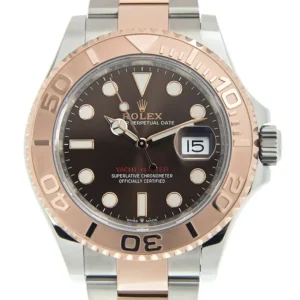
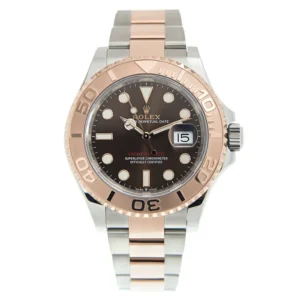
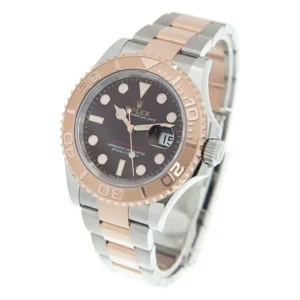
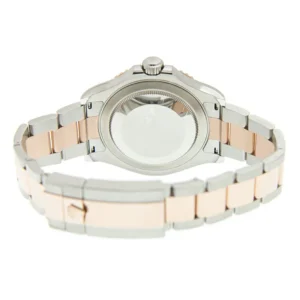
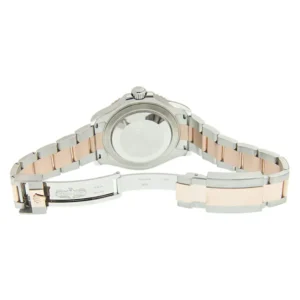
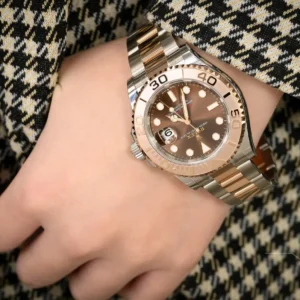
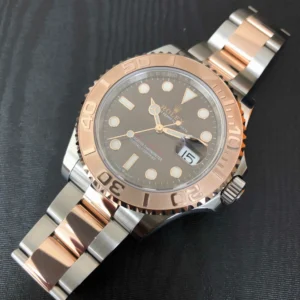
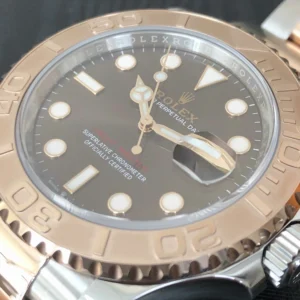
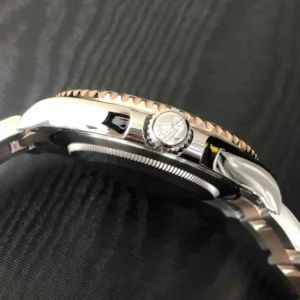
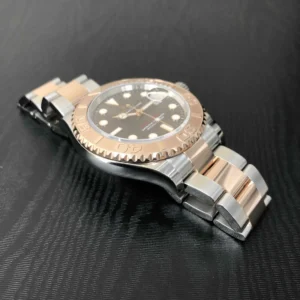
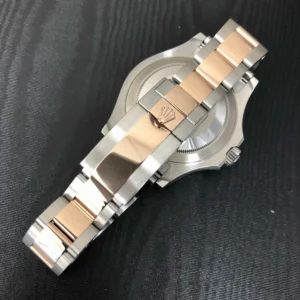
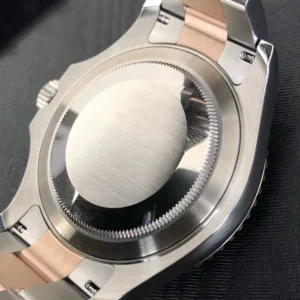
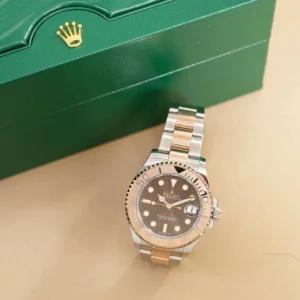
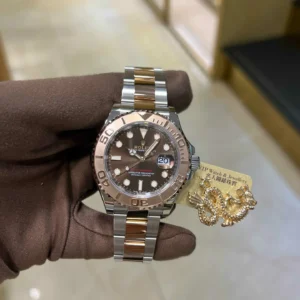
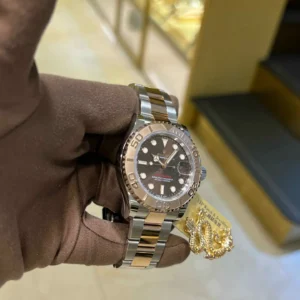
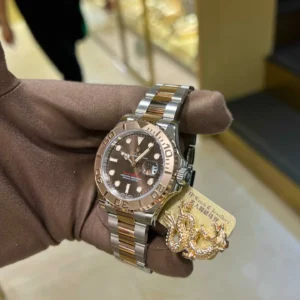
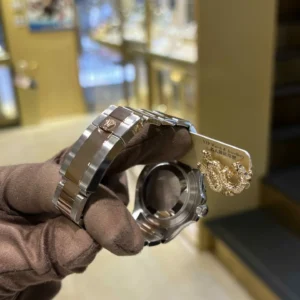

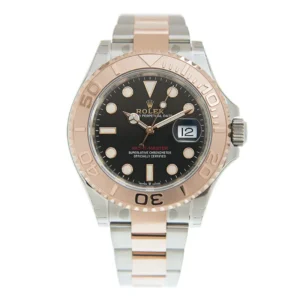
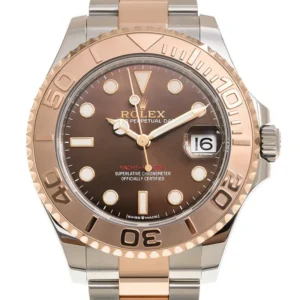
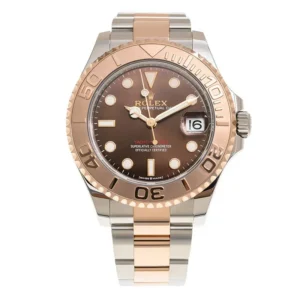
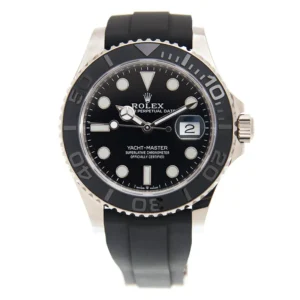
Rolex Yacht-Master 40 126621-0001 Replica Chocolate Dial Everose Rolesor-Style Automatic Watch
$139.00
Series: Yacht-Master
Model Number: 126621-0001
Movement: Automatic
Genuine Reference Movement: Rolex Calibre 3235
Genuine Reference Power Reserve: Approximately 70 Hours
Case Diameter: 40mm
Case Thickness: Approximately 12mm-Class – Exact Product Thickness Should Be Verified
Factory: Clean Factory / VSF – Exact Factory Should Be Verified for the Individual Watch
Crystal: Sapphire-Style Crystal with Cyclops Date Magnifier
Dial Colour: Chocolate
Product Case and Bracelet Material: Stainless Steel with Everose-Gold-Tone Components
Genuine Reference Material: Everose Rolesor – Oystersteel and 18 ct Everose Gold
Bezel: Bidirectional Everose-Gold-Tone 60-Minute Graduated Bezel with Raised Numerals
Genuine Reference Bezel: Bidirectional 60-Minute Graduated Bezel in 18 ct Everose Gold
Bracelet: Two-Tone Oyster-Style Bracelet
Clasp: Folding Oysterlock-Style Safety Clasp with Easylink-Style Extension
Description:
The Yacht-Master 126621 is often reduced to “the rose-gold Submariner,” but that comparison becomes less convincing once the watches are actually worn.
The 126621 uses a 40mm case, Everose Rolesor construction and a chocolate dial, but the more important difference is its purpose. Rolex describes the Yacht-Master as a watch designed around sailing and nautical navigation rather than professional diving. Its bidirectional 60-minute graduated bezel can be used to calculate elapsed time, while the case is water-resistant to 100 metres.
That creates the first useful ownership question:
If the Submariner is technically the more capable dive watch, why do some owners prefer wearing the Yacht-Master every day?
Comfort is a major part of the answer.
In owner discussions comparing the Yacht-Master 40 with the Submariner, people repeatedly describe the Yacht-Master case as slimmer, softer and more comfortable on the wrist. One owner who had worn both described the Yacht-Master as noticeably thinner and more comfortable while also pointing out that the polished center links make it considerably dressier.
That distinction is important for the 126621 because the supplied 13mm thickness should not automatically be treated as genuine-reference geometry. Published measurements of modern Yacht-Master 40 examples are generally closer to the 11.5-12mm range. The exact individual product should therefore be measured rather than copying a generic 13mm specification.
Thickness is not just a specification-sheet detail here. The curved case sides and relatively restrained profile are part of what separates the Yacht-Master from Rolex’s more tool-oriented divers.
A replica can reproduce the chocolate dial beautifully and still feel wrong if the mid-case, caseback and bezel collectively make it unnecessarily tall.
The bezel is an even stronger reference-specific feature.
Unlike the ceramic insert of the current Submariner, the genuine 126621 uses a bidirectional 60-minute graduated bezel made from 18 ct Everose gold. Rolex describes its polished raised numerals and graduations standing against a matt, sand-blasted background.
That combination creates one of the best inspection areas on the entire watch.
Do not judge it simply by asking whether the rose-gold color is close. Inspect the height and shape of the raised numerals, the edges of the relief, the contrast between polished characters and the granular background, the triangle at 12, spacing of the minute graduations and the transition from bezel to case.
The background should not look like a uniformly flat painted surface, and the polished numerals should remain clearly differentiated from it as the watch moves through the light.
This also exposes a fundamental Gen-vs-Rep material difference.
The genuine bezel is solid 18 ct Everose gold. The center links, crown and other specified Everose components are also precious-metal elements within Rolex’s Everose Rolesor construction.
A steel-based replica with rose-gold-tone plating may imitate the color and polished surface, but the material, density and long-term wear behavior remain different.
This matters even more on the 126621 than on many two-tone Datejust references because the bezel itself is a large exposed precious-metal surface.
A fresh QC photograph cannot show how a coating will behave after repeated contact. Long-term evaluation should pay particular attention to bezel edges, crown surfaces, bracelet center links, clasp contact points and areas where links articulate against one another.
The chocolate dial creates another highly model-specific problem: what color is chocolate actually supposed to look like?
Rolex officially calls the dial “chocolate,” not simply brown. In practice, owner photographs show why the distinction matters. The dial can move from dark brown toward copper, bronze or a warmer reddish tone depending on direct light and its interaction with Everose gold.
This makes a one-photo color verdict particularly unreliable.
The genuine-owner community regularly discusses Rolex chocolate dials in terms of how strongly they change with lighting. On the 126621 specifically, owners describe the chocolate and Everose combination as far more dynamic in person than static photographs suggest.
For QC, ask for neutral daylight, indoor ambient light and an oblique angle before deciding that a dial is too red, too dark or too copper.
The important relationship is not an isolated RGB-like shade match. It is whether the dial and Everose-tone components behave coherently together.
That relationship explains much of the watch’s visual appeal.
A black dial would create strong separation from the rose-gold components. Chocolate does something different. It sits closer to Everose in the warm-color spectrum, so the dial, bezel and center links can appear almost integrated in some lighting and much more separated in others.
This is one reason the 126621 can appear relatively restrained in one photograph and extremely luxurious in another.
It also explains why the watch remains divisive.
In Yacht-Master discussions, enthusiasts frequently split between those who think the collection offers a more elegant, less common alternative to the Submariner and those who consider the polished surfaces and precious-metal details too dressy for a sports watch.
Neither interpretation is inherently wrong. The tension is part of the design.
The Yacht-Master keeps several Rolex sports-watch cues – Oyster case, Oyster bracelet, timing bezel, large luminous markers and crown guards – but deliberately combines them with more polished surfaces and precious metal.
The 126621 pushes that idea particularly far because chocolate and Everose make the luxury component impossible to ignore.
Bracelet construction deserves more attention for the same reason.
The genuine Oyster bracelet combines Oystersteel outer links with 18 ct Everose-gold center links. Rolex specifies an Oysterlock safety clasp and Easylink 5mm comfort extension for this reference.
That differs from the Glidelock system associated with the Submariner.
This is not trivia. It reflects the watches’ different design priorities.
The Submariner’s Glidelock provides more extensive adjustment appropriate to its diving role. The Yacht-Master’s Easylink provides a smaller comfort adjustment intended for everyday changes in wrist size.
For replica evaluation, check clasp operation rather than stopping at engraving. Test whether the folding mechanism closes securely, whether the comfort extension operates properly, whether the center links articulate freely and whether the gold tone remains consistent through less visible areas of the clasp.
End-link seating should be inspected on both sides rather than treating one small gap as universal evidence.
The 40mm size creates another active enthusiast topic.
Rolex currently offers the Yacht-Master in several sizes, and owners often describe the 40mm version as a middle ground: enough sports-watch presence without the much larger footprint of the Yacht-Master 42.
The more interesting comparison, however, remains the Submariner.
Because the Yacht-Master case is visually softer and the bezel does not have the same black ceramic tool-watch character, two watches with broadly similar diameters can feel quite different on the wrist. That is another reason a simple “40mm fits most wrists” statement provides little information.
Case silhouette should be evaluated from the side and at normal wrist distance. Look at lug curvature, mid-case thickness, caseback projection, bezel height and the way the first bracelet links leave the case.
The date system is a more conventional QC area, but it still deserves a proper test.
The genuine calibre 3235 provides instantaneous date change with rapid setting, while the sapphire crystal carries a Cyclops magnifier over the aperture. Rolex specifies approximately 70 hours of power reserve for the genuine movement. (rolex.com)
Those specifications belong to the genuine reference.
For a Clean or VSF product, the actual clone movement should be identified separately rather than labeling it “Rolex Calibre 3235.”
Inspect several single- and double-digit dates. Check horizontal and vertical positioning, numeral consistency, Cyclops alignment and whether the date remains readable as the chocolate dial changes appearance under different lighting.
Current replica discussions around the Yacht-Master show that buyers often focus on familiar QC categories such as date centering, bezel alignment, rehaut, SELs and timegrapher performance. Those are useful, but the community also spends considerable time comparing VSF and Clean versions of the Yacht-Master family rather than assuming one factory dominates every component.
That is the better way to use factory information.
Instead of asking only “Clean or VSF?”, ask what is actually different on the individual watch: bezel relief, dial color, case profile, bracelet construction, date presentation, movement and precious-metal-tone execution.
Factory attribution is metadata. The watch still has to survive component-level inspection.
There is another ownership issue that receives surprisingly strong attention: scratches.
The Yacht-Master’s polished center links and polished precious-metal surfaces make normal wear more visible than on a heavily brushed tool-watch bracelet. Owners comparing it with the Submariner frequently mention this difference. (reddit.com)
This is particularly relevant to a two-tone replica because visible wear can involve two separate questions: ordinary scratches in polished surfaces and deterioration or color change in a plated gold-tone finish.
Those should not be confused.
A scratch on genuine solid Everose gold exposes more Everose gold. Damage through a surface coating can potentially reveal a different underlying material.
That is a real long-term Gen-vs-Rep distinction that pristine seller photography cannot demonstrate.
For the 126621-0001, the most useful evaluation therefore centers on Everose bezel relief, chocolate-dial behavior under several lighting conditions, consistency of rose-gold tone across bezel/crown/bracelet/clasp, 40mm case profile and thickness, bracelet articulation, Oysterlock and Easylink operation, multiple date positions, Cyclops geometry, actual movement identity and evidence supporting the claimed Clean or VSF factory.
The larger question is more interesting than whether one marker is half a millimeter out of position:
Why does the Yacht-Master 126621 feel substantially different from a Submariner even though both belong to Rolex’s modern nautical sports-watch family?
The answer lies in the combination of softer proportions, a bidirectional precious-metal bezel, polished bracelet surfaces, 100-metre rather than extreme dive-watch engineering, and the unusually close color relationship between chocolate and Everose.
That is also where a replica should be judged most carefully. Reproducing the basic shape is relatively straightforward. Reproducing the interaction between material, relief, color, proportion and long-term wear is the more difficult problem.
2 reviews for Rolex Yacht-Master 40 126621-0001 Replica Chocolate Dial Everose Rolesor-Style Automatic Watch
Add a review
You must be logged in to post a review.
Related products
Yacht Master
Yacht Master
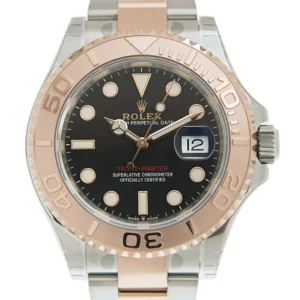
Yacht Master

Michael Young –
The style looked promising online, so I decided to give it a try. I like the way 40mm case and automatic movement fits into the rest of the design. I was mainly concerned about whether the actual item would match the listing, and it was reasonably close. It’s not something I’d overthink now that I’ve seen it in person.
vorbelutr ioperbir –
When I initially commented I clicked the -Notify me when new comments are added- checkbox and now every time a remark is added I get four emails with the same comment. Is there any means you may remove me from that service? Thanks!