
watch
When a Fake Rolex Looks Real, What Actually Proves It’s Genuine?
Sep
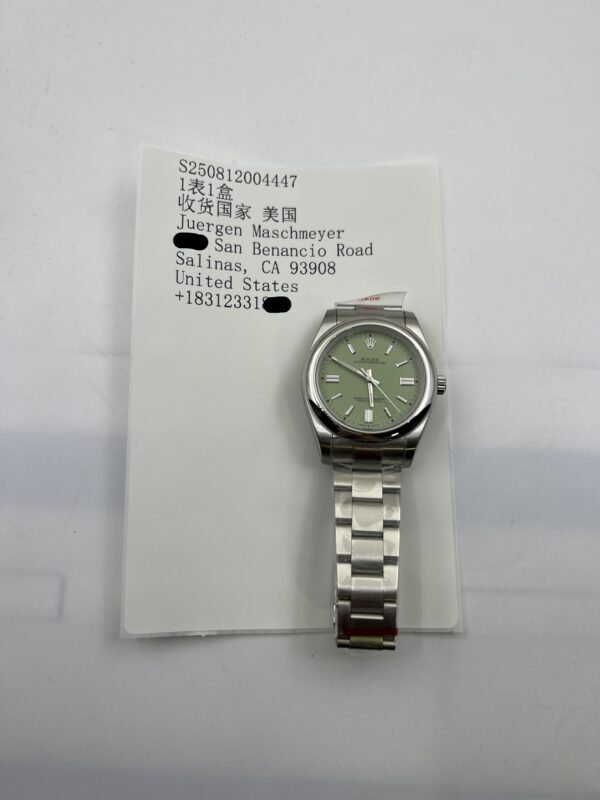
A counterfeit Rolex costing about $500 recently survived a situation that would have sounded improbable not long ago: it was taken into a Rolex store in London, handed to staff for a bracelet adjustment, and returned without anyone identifying it as fake.
That incident has since produced an irresistible headline. The superclone was so convincing that even Rolex could not spot it.
There is just one problem with that interpretation.
The watch did not undergo formal Rolex authentication.
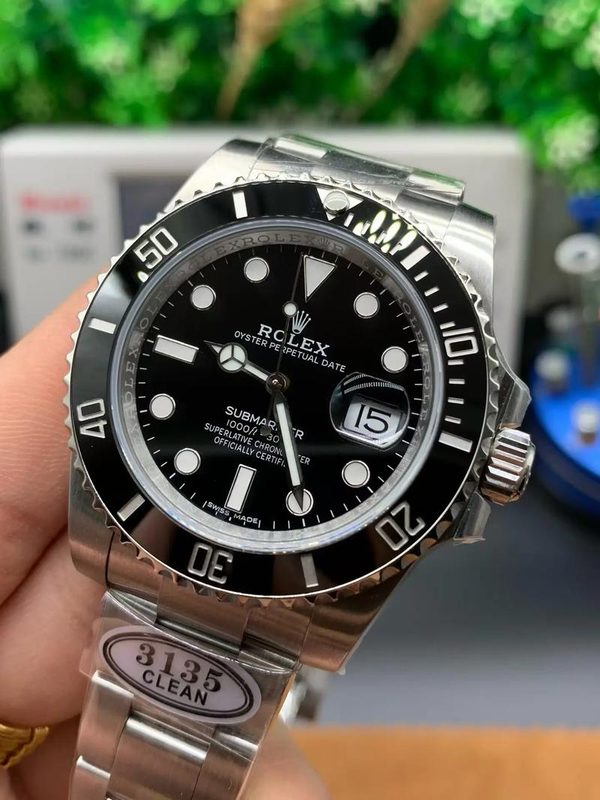
WIRED purchased three counterfeit Rolex watches while investigating the current “superclone” market: a Submariner for $438, a Daytona for $768, and a $498 replica of the Oyster Perpetual Celebration. The Celebration was the watch later presented at a Rolex location for a bracelet adjustment. Staff handled it without challenging its authenticity, which is certainly noteworthy, but adjusting bracelet links is fundamentally different from disassembling a watch to establish what it actually is.
Rolex describes its own Certified Pre-Owned authentication process very differently. Eligible watches return to Rolex workshops, where their original configuration is checked and components from the case and bracelet through to the movement are examined and authenticated. The watches are then serviced, tested and certified.
That distinction changes the story.
The interesting development is not that a $500 counterfeit has somehow defeated Rolex authentication.
It is that some modern counterfeits have become good enough to make casual visual confidence increasingly unreliable.
And that creates a much more useful question for anyone buying a Rolex outside a fully controlled retail channel: if appearance can be copied this convincingly, what evidence should carry more weight?
The Store Visit Proved Less Than the Headline Suggests, but More Than Nothing
It would be easy to dismiss the London episode once the authentication distinction is made.
That would also miss the point.
A bracelet adjustment requires someone to physically handle the watch. The case, bracelet, dial, crystal, finishing, weight and general construction are no longer being judged through an online photograph. A counterfeit that passes through that interaction without raising immediate suspicion has crossed a meaningful threshold.
What it has not demonstrated is authenticity.
Those are different standards.
Imagine four progressively more demanding examinations:
A watch seen on another person’s wrist only needs to look plausible from normal social distance.
A watch handled briefly needs its case, dial, bracelet, clasp, weight and finishing to remain convincing at close range.
A watch opened by someone familiar with the reference has to survive movement and construction scrutiny.
A watch undergoing formal authentication has to survive a much broader examination of its configuration and components.
“Indistinguishable” therefore means very little unless we specify indistinguishable under what level of examination.
That may be the first practical lesson from the superclone story.
The counterfeit industry does not need to reproduce every property of a genuine Rolex to fool someone in every situation. It only needs to reproduce enough of the properties that person is able, willing or expected to examine.
The Counterfeit Industry Is No Longer Copying Only the Visible Parts
Older fake-watch advice often focused on relatively accessible clues: badly printed text, crude date magnification, poor bracelet construction, incorrect bezels, obvious movement errors or finishing that fell apart under magnification.
Those clues have not disappeared.
Their reliability has weakened at the upper end of the counterfeit market.
The watches purchased by WIRED came from manufacturers already discussed extensively inside replica communities, where buyers differentiate factories, versions and movements rather than treating all counterfeits as one quality level. The community even uses categories such as “NWBIG,” shorthand for “Not Worth Buying in Genuine,” to describe replicas members consider unusually close to the authentic model.
The important development is not the slang.
It is what buyers are now comparing.
Discussions increasingly extend beyond dial printing and bezel color into movement architecture, power reserve, winding behavior, parts compatibility, water resistance and serviceability.
Replica movements marketed as versions of the Rolex 3235 illustrate the shift particularly well. Community discussions distinguish between different clone architectures and debate their power reserve, repairability, parts supply and reliability. Even participants who consider the better movements impressive do not describe all “3235 clones” as mechanically equivalent.
That tells us something important about the word “superclone.”
It is not an independent engineering standard.
It does not guarantee a particular movement architecture, tolerance, material specification, water-resistance performance, service history or quality-control process. It is a market and community description whose meaning depends heavily on the exact watch being discussed.
A buyer therefore learns surprisingly little from the word itself.
Factory Reputation Is Not the Same Thing as Individual-Watch Quality
This distinction becomes clearer when reading the communities that know these watches best.
One of the strongest recurring themes is not simply admiration for how convincing the best replicas have become. It is QC.
Buyers inspect photographs before accepting watches. They debate dial alignment, date placement, bezel position, rehaut, bracelet fit, crystal appearance and movement behavior. Separate communities exist specifically because owners sometimes need repairs or adjustments after purchase.
That would be strange behavior if a respected replica factory produced every example to a reliably identical standard.
Community reports about the VS3235 illustrate the problem. Some participants describe it as one of the strongest clone movements available and report positive experience; other owners have reported watches arriving with serious movement problems or failing after only weeks.
None of those anecdotes tells us the true failure rate.
There is no controlled dataset here from which we can responsibly calculate average lifespan or defect probability.
But the disagreement itself is useful.
It tells us that two statements can simultaneously be true:
The better clone movements can be remarkably sophisticated.
Their existence does not establish Rolex-like consistency from one individual watch to the next.
That difference is easy to overlook when a comparison focuses on the best counterfeit example available.
Visual Replication and Manufacturing Consistency Are Different Engineering Problems
This may be the most important distinction in the entire superclone debate.
Making one watch look extremely close to a genuine Rolex is one engineering achievement.
Making thousands of watches repeatedly meet the same performance and durability targets is another.
Rolex’s current Superlative Chronometer framework evaluates seven areas: precision, waterproofness, self-winding, autonomy, resistance to magnetism, reliability and sustainability. The first four include finished-watch testing, while the additional criteria introduced in 2026 extend Rolex’s stated standards further into design and manufacturing.
Its service process illustrates the same philosophy from another direction. Rolex says a serviced watch has its seals replaced, its case tested for waterproofness, its chronometric precision checked again after casing, and its movement subjected to another Rolex-specific test lasting at least 24 hours before a final water-pressure test and inspection.
This does not mean every genuine Rolex will run forever or that genuine watches never require repair.
It means the genuine product comes with a defined system for manufacturing, testing, servicing and supporting its performance.
A counterfeit can reproduce a case shape without reproducing that system.
It can reproduce movement architecture without proving the same statistical consistency.
It can imitate a waterproof case design without demonstrating that every assembled example left the factory properly sealed.
That distinction is difficult to photograph, which is precisely why visual comparisons tend to undervalue it.
Water Resistance Shows Why Construction and Verification Are Not the Same Thing
Replica-watch communities provide a particularly good real-world example.
Owners of high-end Submariner replicas frequently report swimming with their watches successfully. Some have pressure-tested individual watches and reported passing results.
Other owners and people who work on these watches report receiving examples with loose casebacks, inconsistent gasket preparation or watches that failed pressure testing despite looking perfectly normal from the outside.
There is no contradiction that needs to be resolved.
The more useful conclusion is:
Construction similarity is not verified performance.
A replica Submariner may contain the physical ingredients required to resist water. That does not prove the individual example has been assembled and tested to the resistance printed on its dial.
This is exactly the type of difference that disappears in side-by-side photography.
The genuine and counterfeit cases can look almost identical while the confidence attached to their performance remains very different.
Movement Accuracy Has the Same Evidence Problem
The original social-media discussion behind the Men’s Journal story raised an obvious question: if Chinese manufacturers can reproduce the movement architecture, can the clone also keep time as accurately as the genuine watch?
Individual reports suggest that some can perform impressively.
Replica owners sometimes report clone movements running within only a few seconds per day, and certain community members describe the better movements as quiet, capable and surprisingly close to the genuine architecture.
But a single accurate movement does not answer the important question.
Accuracy today is not the same as accuracy across a production run, after shocks, after magnetism exposure, after years of lubrication aging, or after service.
Nor does one owner reporting several years of satisfactory operation establish the average lifespan of the movement.
This is where enthusiast evidence has to be interpreted carefully.
Anecdotes can establish possibility.
They are much weaker at establishing probability.
So the defensible conclusion is not that clone movements cannot equal genuine Rolex accuracy. Some individual examples clearly can perform very well.
The unanswered question is whether they can reproduce the same level of repeatability and long-term confidence across many watches.
Public community evidence does not currently give us a reliable answer.
The Hardest Fake May Not Be a Completely Fake Watch
There is another reason visual authentication is becoming less useful.
Not every counterfeit-related watch fits neatly into “real” or “fake.”
Watch-repair communities document hybrid or “franken” watches containing combinations of genuine and replica components. In one example discussed by watchmakers, a watch reportedly contained a genuine case, strap, crown, dial and crystal but a replica movement. Participants noted that the movement remained identifiable to someone who knew what to inspect, even though much of the exterior was genuine.
This complicates the usual internet checklist.
Suppose the dial is genuine.
Checking the dial more carefully will not reveal the problem.
Suppose the bracelet, crown and crystal are genuine too.
Those components can all pass inspection individually while the watch as a whole still is not what a buyer believes it to be.
That is why serious authentication cannot be reduced to finding one magical “tell.”
As counterfeits improve, authentication becomes increasingly multi-factor.
The relevant question moves from:
“Can I find something that looks fake?”
toward:
“Does every important component, configuration and piece of provenance make sense together?”
That is a much harder standard.
Provenance Becomes More Valuable as Appearance Becomes Less Informative
This leads to a counterintuitive consequence of better counterfeits.
The more accurately appearance can be copied, the more valuable non-visual evidence becomes.
For a buyer evaluating a pre-owned Rolex, that can include the credibility of the seller, reference and serial consistency, service history, ownership documentation, component originality, movement examination and, where appropriate, formal authentication.
None of those factors is as satisfying as a five-second trick for spotting a fake.
That is precisely the point.
There may no longer be a universal five-second trick.
Rolex’s own CPO process reinforces this. The company does not describe authentication as comparing a handful of cosmetic tells. It says the watch returns to its workshops, where its original configuration and components are checked before the watch is certified.
For consumers, this changes the risk calculation.
Buying the seller has always mattered in the vintage-watch world.
Better counterfeits make the same principle increasingly relevant to modern watches.
A Superclone Can Be Excellent at the Wrong Test
One reason the superclone debate becomes confused is that people are often measuring different things.
If the test is:
“Can it look convincing on the wrist?”
The answer for some high-end counterfeits is clearly yes.
If the test becomes:
“Can it survive brief handling without immediately looking fake?”
The London bracelet-adjustment episode suggests that at least one example did.
If the test is:
“Can an individual clone movement keep excellent time?”
Owner reports suggest that some can.
But those are not the same tests as:
“Can its complete configuration survive expert authentication?”
“Can its water resistance be trusted without individual verification?”
“How consistently was it assembled?”
“What happens when it requires service?”
“Will parts remain available?”
“What is its failure rate over five or ten years?”
“Can its ownership history and originality be established later?”
The evidence becomes much thinner as the questions move from appearance toward long-term ownership.
That does not prove the counterfeit will fail.
It means we should stop treating success in one category as proof of success in all the others.
“Not Worth Buying in Genuine” Depends on What You Think You Are Buying
The replica community’s NWBIG label is interesting because it exposes a deeper disagreement about what a luxury watch actually consists of.
If the objective is predominantly visual – case proportions, dial appearance, bracelet feel and recognizable design – a $500 replica that gets surprisingly close to a five-figure genuine watch can make the price difference look irrational.
If the product is defined more broadly, the comparison changes.
A genuine Rolex includes provenance, legal authenticity, manufacturer-backed service, known reference identity, established component standards, resale legitimacy and a testing framework attached to the finished watch.
Whether those things are worth thousands of dollars is a personal value judgment.
But they are not imaginary differences simply because they cannot be seen from across a table.
This is where the original story’s most provocative hypothetical – that the same counterfeit might feel more satisfying if someone believed it had been sold as genuine – becomes useful.
It suggests that part of luxury-watch value exists outside the physical object.
That may be uncomfortable for enthusiasts who prefer to think entirely in terms of materials and machining, but provenance has always mattered in collecting. Two physically similar watches can have radically different values because one has a documented identity and the other does not.
Better counterfeits do not eliminate that distinction.
They make it more visible.
The Real Risk Is Confidence
The most consequential result of the superclone industry’s progress may therefore have little to do with whether replica owners enjoy their watches.
It is the erosion of casual confidence in the secondary market.
A crude fake creates relatively little ambiguity.
A sophisticated counterfeit does.
A hybrid watch containing genuine and replica parts creates even more.
That means the old idea of authenticity as something an experienced buyer can always establish from a photograph, a dial detail or the feel of a bracelet becomes increasingly difficult to defend.
The practical response is not paranoia, and it is not memorizing an ever-expanding catalog of microscopic tells.
It is changing the hierarchy of evidence.
Visual inspection still matters.
Movement examination can matter more.
Reference consistency matters.
Component history matters.
Seller credibility matters.
Provenance matters.
And when the financial exposure justifies it, professional authentication matters.
The better counterfeit watches become at reproducing what we can see, the more important the evidence we cannot see at first glance becomes.
That is the real lesson of the $500 Celebration.
It did not prove that Rolex can no longer recognize its own watches.

