
watch
The Fake Swiss Watch Trade Has a Small-Package Problem
Nov
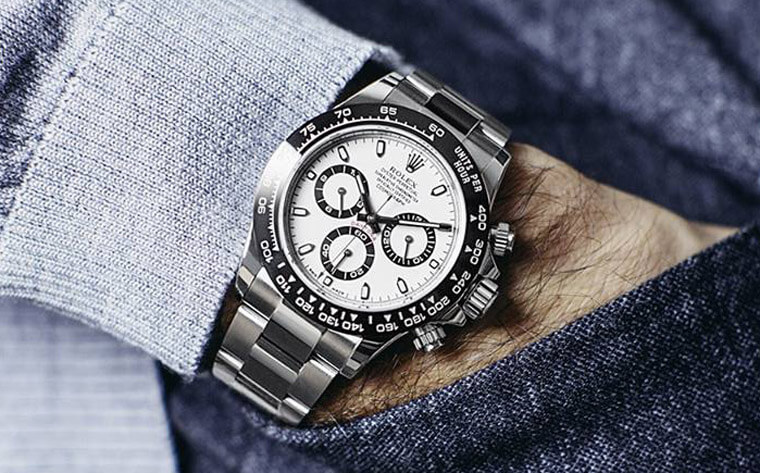
A watch box doesn’t take up much room in a delivery van. It can pass through a sorting facility alongside phone cases, cosmetics, and thousands of other purchases made online. By the time someone opens the package, the seller may be in another country, the payment may be difficult to reverse, and the watch inside may carry a Swiss luxury brand’s name without having any connection to its manufacturer.
That ordinary-looking parcel has become one of the biggest headaches for the Swiss watch industry.
In October 2025, the Federation of the Swiss Watch Industry arranged the destruction of approximately 7,500 counterfeit watches in Köniz, near Bern. Together, they weighed about 1.5 metric tons. Swiss customs had confiscated them between 2019 and 2025.
The operation attracted attention because of its scale. Thousands of imitation watches collected over six years made a striking display of enforcement.
Yet the more revealing development in counterfeit watch trafficking has been happening at the opposite end of the scale.
According to a 2025 OECD report, 97% of customs seizures involving counterfeit watches that infringed Swiss intellectual property rights in 2020-2021 concerned shipments containing fewer than ten items.
The counterfeit watch business has become remarkably well suited to the economics of online shopping. An individual watch is valuable enough to justify international shipping, compact enough to fit in a small parcel, and easy to advertise through photographs.
A seller no longer needs a physical store in the buyer’s country. The storefront can be a website, an online marketplace listing, or a social media account. Payment and delivery can take place without either party meeting.
Customs authorities are left looking for individual watches among enormous volumes of legitimate shipments.
The OECD’s findings also put the economic scale into perspective. In 2021, global trade in counterfeit watches infringing Swiss brands was estimated at $1.88 billion. The associated loss of sales for the Swiss watchmaking industry was estimated at $1.08 billion, with approximately 2,537 jobs affected.
These are modeled estimates, not a count of watches discovered by customs officers. The actual volume of illicit trade is impossible to observe directly. Nevertheless, the figures indicate why counterfeiting remains a major concern for an industry whose products depend heavily on brand identity.
Watches accounted for 87% of global customs seizures involving counterfeit goods that infringed Swiss intellectual property rights during 2020-2021. Other Swiss industries, including clothing, electronics, and leather goods, were affected too, but watches dominated the recorded cases.
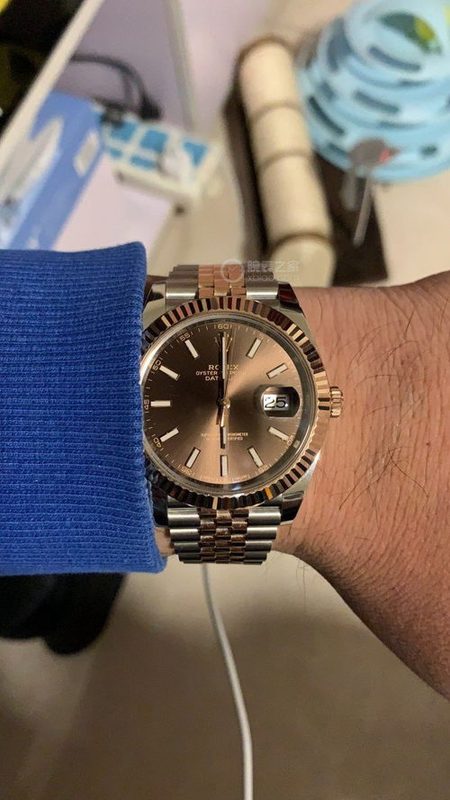
Their popularity with counterfeiters is not difficult to understand. A recognizable luxury-watch design can communicate status even when the mechanical movement inside is inexpensive. Buyers may be attracted by the appearance, the branding, or the possibility of obtaining something that looks like a watch costing many times more.
The industry has also had to contend with increasingly convincing imitations. Specialists consulted for the OECD report described a wide range of quality, from crude copies to watches closely resembling genuine products.
The term swiss fake watches therefore covers very different merchandise. Some products are immediately recognizable as counterfeits. Others may be difficult to assess from seller photographs alone.
That variation complicates enforcement, but it creates an equally serious problem for consumers who believe they are purchasing authentic watches.
A counterfeit sold openly as a replica and a counterfeit passed off as a genuine Swiss watch may look identical. The buyers, however, are entering very different transactions.
One knows the product is unauthorized. The other may be paying a genuine-watch price for something the manufacturer never made.
Earlier OECD research on counterfeit Swiss watches estimated that a substantial share of buyers knowingly purchased imitations. The same research identified significant financial harm among consumers who were deceived.
Online commerce allows both markets to operate through similar channels.
A seller can use the same product photographs, delivery services, and payment arrangements whether the customer understands the watch is counterfeit or has been misled into believing it is genuine.
For the unsuspecting buyer, discovering the problem can be expensive.
A watch purchased from an unauthorized seller may arrive with convincing packaging and documentation. The customer may not discover the truth until seeking authentication, repairs, or warranty service.
The OECD’s 2025 report describes complaints received by genuine Swiss watch manufacturers from people who had unknowingly purchased counterfeits. Some expected the real brands to resolve problems with watches those companies had never produced.
That is a peculiar consequence of successful imitation. A counterfeit manufacturer can sell a watch using another company’s reputation, while the legitimate manufacturer may eventually receive the complaint.
For consumers who knowingly order replicas, the immediate risk is different.
The watch may never arrive.
When customs officials seize an individual shipment, the purchaser may already have paid. Recovering the money from a distant seller can be difficult, particularly when the transaction took place through an informal sales channel.
The OECD identified this transfer of financial risk to the consumer as one consequence of direct-to-consumer counterfeit sales.
There is a second reason small shipments are troublesome for enforcement authorities: the number of inspections required.
Finding one counterfeit watch in a parcel does not necessarily identify other shipments from the same seller. The sender may use intermediaries, and the recipient may have purchased only one item. Investigators need information that connects individual transactions to a broader distribution operation.
Meanwhile, legitimate international e-commerce continues to generate enormous volumes of packages. Customs agencies cannot physically inspect every shipment without disrupting ordinary trade.
The OECD’s analysis found that nearly three-quarters of seizures involving counterfeit Swiss goods contained a single item. Mail accounted for 75% of the relevant customs seizures during 2020-2021.
Those figures describe detected cases. They cannot tell us what proportion of all counterfeit shipments successfully crossed a border, because the undetected shipments are not counted.
That missing denominator is one of the hardest problems in measuring counterfeit trade.
A rise in seizures could indicate more counterfeiting, more effective enforcement, or both. A decline could reflect reduced trafficking, changes in shipping routes, or fewer successful inspections.
The number of watches confiscated is therefore an incomplete measure of how well the market is being controlled.
The Industry’s Problem Doesn’t End at the Border
For a Swiss manufacturer, a counterfeit watch represents more than a potentially lost sale.
The company may have invested decades in developing a recognizable case design, dial arrangement, movement technology, and reputation for after-sales service. Counterfeiters can imitate some of those visible features without bearing the same development costs.
The resulting product may be marketed using the genuine manufacturer’s name, even though its construction and quality control are entirely separate.
Not every fake-watch purchaser would otherwise have bought the genuine article, which makes simple one-for-one lost-sales calculations unreliable. The OECD uses economic modeling to estimate commercial effects rather than assuming that every counterfeit sale replaces an authentic purchase.
The reputational problem is harder to quantify.
A customer who receives a poorly functioning imitation may associate the experience with the brand printed on its dial. A secondhand buyer may encounter a counterfeit in what appears to be an ordinary resale transaction. Even knowledgeable collectors must sometimes spend additional time establishing whether a watch and its components are authentic.
These costs extend beyond the original transaction.
They also explain why authenticity in watchmaking cannot be reduced to how closely a product resembles the genuine article.
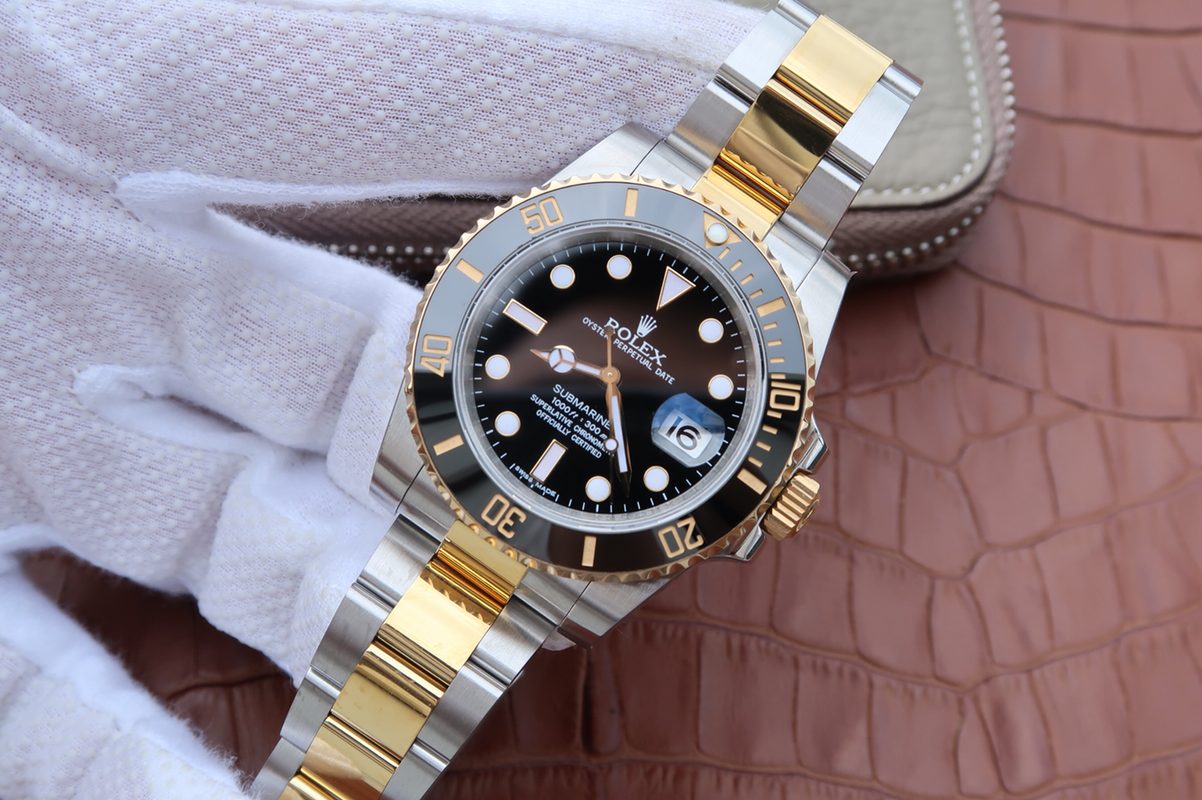
A counterfeit might reproduce a case shape, bracelet style, or dial layout. Its manufacturing origin and authorization remain separate matters. A convincing imitation is still an imitation, regardless of how well its external details have been reproduced.
For legitimate Swiss manufacturers, controlling the use of their names and trademarks is part of protecting the identity of the products they actually make.
For customs authorities, the challenge is more practical: finding unauthorized merchandise before it reaches the purchaser.
The destruction in Köniz demonstrated what happens when that effort succeeds. Thousands of watches confiscated over several years were taken out of circulation in a single operation.
But the OECD’s data point toward an enforcement problem that cannot be solved simply by organizing larger destruction events.
More effective coordination among customs agencies, postal operators, and online platforms could help connect individual shipments with the sellers and networks behind them. Better information sharing may also make it easier to identify recurring patterns without treating every legitimate international purchase as suspicious.
The task is complicated by the nature of the merchandise itself. A single counterfeit luxury watch can be financially significant while occupying almost no space.
That combination makes watches particularly suitable for fragmented international distribution.
The 7,500 watches destroyed outside Bern were the visible result of years of successful interceptions. Each had already been discovered, identified, and confiscated.
What remains unknown is how many similar watches traveled through the same international delivery networks without attracting attention.

