
Luxury
Counterfeit Rolex Watches Can Come With Convincing Papers
Nov
A pre-owned Rolex arrives with its green box, warranty card, instruction booklet, and a receipt bearing the name of a jewelry store. The serial number printed on the card matches the number engraved on the watch, and the seller has a reasonable explanation for why it is being sold. Nothing about the presentation immediately suggests a problem.
For many buyers, that combination feels reassuring. The documents appear to establish a history, the matching numbers suggest consistency, and the packaging makes the watch seem more complete than an identical example offered without accessories.
Yet none of those details, individually or together, proves that the watch is genuine.
The distinction matters because counterfeit Rolex watches are no longer the only products being imitated. Warranty cards, packaging, and accompanying paperwork can also be reproduced, creating an apparently coherent set of evidence around a watch whose authenticity has never been established.
This is not merely a theoretical concern. In its guide to purchasing pre-owned Rolex watches, Fratello specifically warns that counterfeit paperwork exists and illustrates differences between genuine and copied documents. The publication also explains that Rolex boxes and generic instruction booklets can be obtained separately from the watches they originally accompanied.
A buyer examining a complete package therefore faces two questions that are easy to confuse: whether the accessories appear appropriate for the model, and whether the watch itself is authentic. A satisfactory answer to the first provides useful context, but it does not settle the second.
How a Serial Number Becomes More Persuasive Than It Should Be
A serial number has an unusual psychological advantage over other details in a secondhand watch listing. Unlike a seller’s description of the condition or history, it looks objective: a specific sequence of characters that can be compared across the watch and its documents.
If the numbers match, the buyer may feel that an important verification step has been completed.
The problem is that matching information is not necessarily independent information.
Suppose a counterfeit watch carries a copied serial number and is accompanied by a card bearing that same number. The apparent agreement between the two does not establish authenticity because both items may have originated from the same source of false information.
This is a basic limitation of documentary evidence. Two claims that repeat one another are not equivalent to two independent confirmations.
A serial number can still be valuable when evaluating a Rolex. For older references, it may help place the watch within an approximate production period, while the reference number and other identifying details can be considered alongside the configuration being offered. Such information may expose inconsistencies that deserve investigation, particularly when a watch’s stated age, appearance, and accompanying documentation do not fit together.
But a plausible serial number is not the same as an authenticated watch. Rolex does not offer a public consumer database in which entering a serial number produces an official determination of authenticity.
This is particularly important for buyers accustomed to verifying electronics, vehicles, or other products through online registration systems. The presence of an identification number does not mean that the manufacturer offers a corresponding public authentication service.
The more convincing the documents become, the easier it is to mistake internal consistency for independent verification.
What the Original Papers Actually Tell You
Rolex paperwork has changed over the decades, and its meaning depends partly on the period in which the watch was sold. Older watches may be accompanied by paper certificates, while more recent examples use warranty cards. Receipts, service records, booklets, and presentation boxes provide different kinds of information, even though sellers often group them together under the familiar phrase box and papers.
An original warranty document can help establish details associated with a watch’s initial sale. A dated receipt may provide information about a transaction, while a service record can help document later work. These records may be useful when reconstructing ownership history, but their value depends on their authenticity, relevance, and connection to the actual watch.
The distinction becomes clearer with generic accessories.
A Rolex instruction booklet generally describes a model or family of watches rather than certifying an individual serial number. An appropriate booklet may make a package more complete, but it does not independently establish that the accompanying watch was manufactured by Rolex.
Boxes present a similar limitation. They can be separated from watches, retained after a sale, or acquired later. A genuine Rolex box surrounding a counterfeit watch remains a genuine box surrounding a counterfeit watch.
Even original documents can be misunderstood when the relationship between the paperwork and the current watch has not been established. A receipt may be genuine without proving that the watch presently offered is the same item described in the transaction. A service record may document work performed at a particular time without establishing everything that happened to the watch afterward.
These distinctions are especially relevant to vintage Rolex collecting, where decades of ownership, repairs, and changes can make a watch’s history more complicated than its current presentation suggests.
A detailed vintage Rolex reference manual makes the point directly: old warranty papers and sales or service receipts can contribute useful historical information, but they should not be treated as absolute proof of authenticity.
That is a more useful way to understand documentation. Papers are evidence about a watch’s history, not a substitute for examining the watch.
The Difference Between a Seller’s Guarantee and Rolex Certification
A seller may describe a watch as authenticated, inspected, or guaranteed genuine. Those statements can be meaningful, but they do not all represent the same process.
A dealer’s guarantee is a commercial promise made by the seller, subject to its terms and the dealer’s ability to honor them. An independent watchmaker’s assessment may provide valuable technical evidence, although its scope depends on what was actually examined. A visual inspection, for example, is not necessarily equivalent to an examination of the movement and individual components.
Rolex’s own Certified Pre-Owned program provides a useful contrast because the company publicly describes the procedures behind its certification.
According to Rolex, watches admitted to the program return to its workshops, where their original configuration is checked and their components are authenticated. The process includes a detailed examination extending from the case and bracelet to the movement, followed by servicing and performance testing. Eligible watches are sold through participating official Rolex retailers and receive a new two-year international guarantee.
Rolex also issues a distinct Certified Pre-Owned guarantee card that serves as an official certificate of authentication.
This is fundamentally different from an ordinary pre-owned watch being advertised with its original warranty card. The original card relates to the watch’s earlier sale; the Certified Pre-Owned documentation accompanies a current authentication process carried out under Rolex’s program.
The distinction should not be reduced to the presence of a special card, either. The significance of Rolex Certified Pre-Owned certification comes from the inspection and verification process behind it, together with the authorized retail channel and the manufacturer’s guarantee.
For buyers comparing watches from different sources, the important question is therefore not simply whether the seller supplies an authentication certificate. It is who issued that certificate, what examination supports it, and what responsibility the issuer accepts if the assessment proves incorrect.
A certificate without a clearly defined verification process can provide a greater impression of certainty than the evidence justifies.
Why the Seller’s Story Still Matters
Documents are only one part of a pre-owned watch transaction. The seller’s explanation of how the watch was acquired, why it is being sold, and what has happened to it during ownership can provide additional context.
A coherent account may help establish a timeline, especially when it can be connected to dated records or independently verifiable transactions. A seller who can explain an earlier purchase, subsequent servicing, and a change in ownership may provide more useful information than someone who offers only a generic assurance of authenticity.
Nevertheless, a convincing story remains a claim until its relevant details are supported.
The problem is not that every seller is dishonest. It is that an authentic watch can have incomplete documentation, while a counterfeit watch can be accompanied by a detailed and persuasive account. The quality of the story and the authenticity of the object are separate questions.
This creates an uncomfortable situation for legitimate owners who have lost their original paperwork.
A genuine Rolex does not become counterfeit because its box or warranty card is missing. Many watches have been owned for decades, passed between family members, or sold without their original accessories. In those circumstances, the absence of documentation may increase uncertainty about provenance without establishing anything negative about the watch’s physical authenticity.
Conversely, a complete set may reduce uncertainty about a watch’s history while leaving questions about the watch itself unresolved.
A useful evaluation must allow for both possibilities rather than treating paperwork as a simple pass-or-fail test.
When a Complete Set Is Worth More Than the Evidence It Provides
Original packaging and documents can have genuine market value. Collectors often prefer watches accompanied by accessories appropriate to their production period, and a well-documented ownership history may make an example more desirable than a comparable watch with little information about its past.
That preference is understandable. Collecting is not limited to mechanical performance; originality, historical context, and completeness can also matter.
The difficulty arises when the commercial premium attached to a complete set is mistaken for proof that the watch is authentic.
A buyer may be willing to pay more for a Rolex accompanied by original documentation, but the additional price should reflect the value of that documentation only after the watch and its accompanying materials have been assessed appropriately.
This is especially relevant to discontinued models, where historical details may influence collectibility and where buyers sometimes place considerable importance on period-correct accessories.
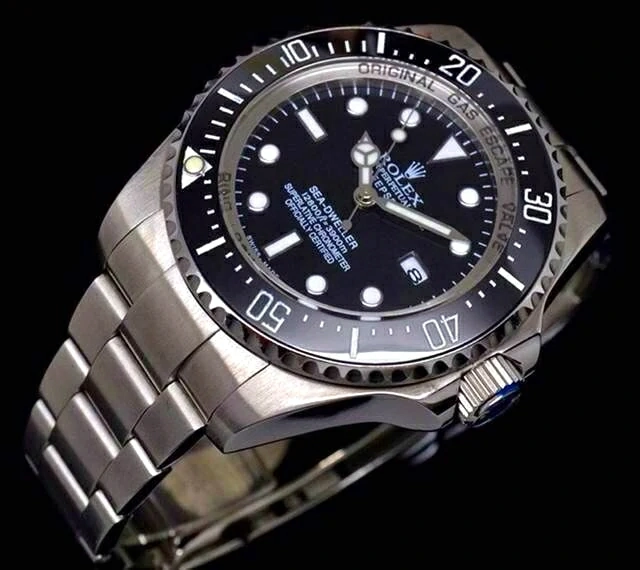
An older Submariner, for example, may be offered with a box, certificate, and accessories that appear consistent with its era. Those items can contribute to the historical presentation of the watch, yet the watch’s case, movement, dial, and other components still require their own evaluation.
The relationship between completeness and authenticity is therefore asymmetric. Authenticity gives documentation its proper context, but documentation alone cannot establish authenticity.
That distinction is easy to overlook in a market where the phrase full set often appears prominently in listing titles and descriptions.
A Better Way to Understand Counterfeit Rolex Risk
The most consequential change in counterfeit Rolex watches may not be a single improvement in case finishing, dial printing, or movement construction. It is the growing difficulty of relying on superficial signs of legitimacy when both the watch and its supporting presentation can be imitated.
This does not mean that boxes, cards, serial numbers, receipts, and ownership histories are useless. On the contrary, genuine documentation can be valuable, particularly when its origin and relationship to the watch can be established.
What matters is the type of question each piece of evidence can answer.
A warranty card may help document an original sale. A serial number can contribute to an assessment of a watch’s identity and period. A receipt may support a particular transaction history, while a service record may establish that work was performed at a given time. None should automatically be interpreted as an independent authentication of the watch currently being offered.
The strongest evidence comes from examining the watch itself through a credible process, with documentation used to support rather than replace that examination.
Rolex’s Certified Pre-Owned program illustrates how much more is involved in formal authentication than matching a serial number to a card. Its published process includes examination of the watch’s original configuration and individual components, followed by servicing, testing, and a manufacturer-backed guarantee.
For an ordinary secondhand transaction, an equivalent level of certainty may not always be available. Buyers and sellers may instead rely on a combination of specialist examination, credible provenance, and clearly defined contractual protections, recognizing that each addresses a different part of the risk.
The central mistake is to treat a collection of reassuring details as though it were a single conclusive answer.
A counterfeit Rolex can arrive with convincing paperwork. A genuine Rolex can arrive without any paperwork at all. Understanding that difference is essential to evaluating the evidence rather than merely the presentation.

