
watch
The Rolex Submariner Clone That Looks Right but Feels Wrong
Nov
By late afternoon, a steel watch bracelet can become noticeably less comfortable than it was in the morning. Heat, activity, and ordinary changes in wrist circumference can turn a previously comfortable fit into something restrictive. The owner opens the clasp, extends the bracelet slightly, and closes it again.
On a Rolex Submariner, this adjustment is part of the design. The Glidelock system allows the bracelet to be lengthened or shortened without removing links or using tools. It is a practical feature that tends to receive far less attention than the watch’s rotating bezel or dial.
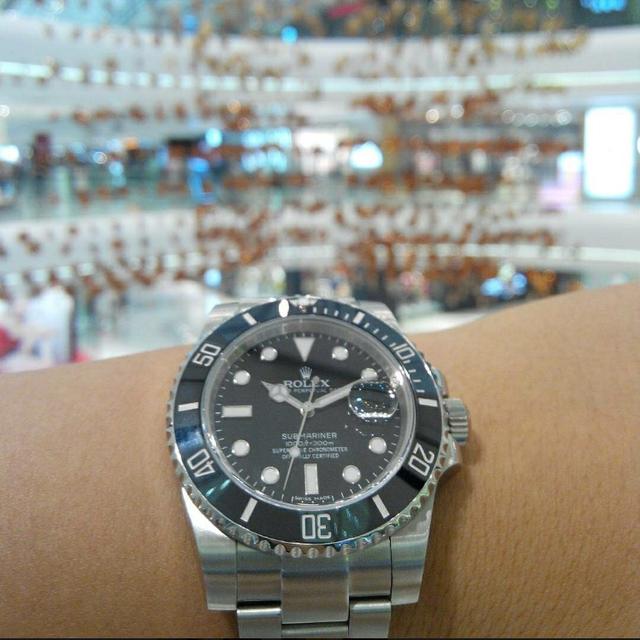
For a Rolex Submariner clone, reproducing that experience presents an interesting manufacturing challenge. A replica can have the correct case diameter, a convincing dial, and nearly identical overall weight, yet still feel different when the owner adjusts the bracelet or wears the watch for several hours.
The difference may have little to do with what appears in a photograph.
In September 2025, a contributor to published a comparison between a genuine Rolex Submariner 116610LN and a VSF replica of the same reference. The owner was impressed by the replica’s visual similarity but disappointed by its physical feel. The bracelet reportedly had noticeable play and made inexpensive-sounding clicking noises, while the case edges felt sharp and the bezel turned too freely.
The account was unusually relevant because the writer already owned the genuine watch and could compare the two directly.
It was also only one owner’s experience.
Other Submariner replica owners have reported substantially more favorable impressions, including examples they considered comfortable and close to the genuine watch in weight and handling. The disagreement raises a question that photographs cannot resolve: what actually makes a bracelet feel well made?
The answer begins with the way its components move against one another.
A Bracelet Is a Collection of Moving Parts
The Oyster bracelet looks simple from a distance. Its three-piece links create a continuous band of brushed metal, interrupted by the clasp beneath the wrist. That visual simplicity conceals a large number of mechanical interfaces.
Every articulated link must move relative to the next. Pins or screws hold the assembly together, while the dimensions and finishing of the individual components determine how freely the bracelet bends.
A bracelet with excessively tight joints may feel stiff and resist the natural curve of the wrist. One with excessive clearance may produce noticeable lateral movement or rattling. Neither characteristic can be evaluated reliably from the bracelet’s weight alone.
The relationship between tolerances and comfort is particularly important.
A bracelet can be made from a suitable grade of stainless steel and still have poorly finished edges. It can also be close to the genuine bracelet’s total weight while distributing that weight differently across the links and clasp.
Those differences may become noticeable during movement.
When the wrist rotates, the bracelet must accommodate changes in angle without allowing individual components to dig into the skin. The case and bracelet also need to sit together in a way that avoids concentrating pressure at a small number of contact points.
An owner may describe the resulting sensation as smooth, solid, loose, sharp, or uncomfortable. Those words are subjective, but they can reflect measurable differences in geometry, clearance, and surface finishing.
This is why the common claim that a replica bracelet is made from 904L steel is not enough to establish its quality.
Rolex uses Oystersteel, a corrosion-resistant steel belonging to the 904L family. The material contributes to the durability and appearance of its watches, but material composition alone does not determine how accurately individual links are manufactured or how carefully their edges are finished.
Two bracelets made from similar steel can feel very different.
The metal is only the beginning of the story.
What Rolex Actually Built Into the Clasp
Rolex’s Glidelock mechanism was introduced in 2008. On the contemporary Submariner Oyster bracelet, it provides approximately 20 mm of adjustment through ten notches spaced roughly 2 mm apart.
The mechanism was developed partly to allow a diving watch to fit over a wetsuit, but its usefulness extends well beyond diving. A small adjustment can also accommodate changes in wrist circumference during ordinary wear.
The system is integrated into the Oysterlock safety clasp, which is designed to help prevent accidental opening.
Rolex’s official instructions describe a straightforward sequence: open the safety catch and clasp, release the bracelet from the adjustment rack, move it to the desired position, and secure it again.
The important engineering detail is the relationship between the sliding bracelet component and the notched adjustment mechanism.
The parts must engage securely while remaining easy enough to reposition when adjustment is required.
A mechanism that is too stiff can be frustrating. One with excessive play may feel less precise, even if it remains functional. Poorly finished contact surfaces can also create an unpleasant sensation during adjustment or contribute to wear over time.
The Glidelock’s usefulness therefore depends on more than the number of available adjustment positions.
Its operation involves fit, friction, component geometry, and the consistency of the mechanism’s engagement.
These are characteristics that can be difficult to judge from standard product photographs.
A replica may reproduce the correct external clasp shape and adjustment range while differing in the way the mechanism moves.
That difference becomes especially apparent to someone who regularly handles a genuine Submariner.
A Small Edge That Started a Larger Discussion
In May 2026, a contributor posted a comparison involving the Glidelock clasp on an ARF 41mm Submariner replica.
The owner had noticed a narrow, relatively sharp internal edge on the replica clasp. In the comparison presented, the corresponding area of the genuine Rolex clasp appeared wider and flatter.
The contributor believed that the replica’s edge could contact and scratch an adjacent bracelet link.
The discussion attracted responses from other owners, including someone with a Clean 124060 who reported a similar-looking clasp detail but no significant scratching after approximately a year.
This is a useful example of why manufacturing observations and their consequences should be kept separate.
The photographed difference in edge geometry was a specific observation. The possibility that it could cause wear was a plausible mechanical concern. The extent to which it actually damaged bracelets across different watches remained unproven.
The distinction matters because a small difference in component geometry can be real without producing the same practical outcome for every owner.
It also shows why the most informative comparisons are not always found on the visible exterior of the watch.
The underside of a clasp may receive little attention in a promotional photograph. Yet its finishing can influence how the mechanism operates, how parts contact one another, and how the watch feels during daily use.
In April 2026, another contributor described discomfort from a VSF Submariner 116610 bracelet, identifying a raised middle-link section and sharp edges as possible causes.
The owner found the bracelet sufficiently uncomfortable to seek advice about correcting the problem without damaging its finish.
One response came from another VSF Submariner owner who considered the model exceptionally comfortable.
Neither account invalidates the other.
The two watches may have differed in production details, individual finishing, wear, or adjustment. The owners may also have had different wrist shapes and sensitivities to pressure.
The evidence does not establish which explanation was responsible.
What it demonstrates is that bracelet comfort cannot be inferred reliably from the factory name alone.
The Problem With Replacing a Bracelet to Solve Everything
Enthusiast discussions frequently propose replacing a replica’s bracelet with one from another manufacturer.
The logic is understandable. If a particular factory produces a convincing case and movement but a disappointing bracelet, replacing the bracelet may appear to offer the best of both worlds.
Yet owner reports show that the result is not always an uncomplicated improvement.
In July 2025, a participant described replacing the bracelet on a VSF Submariner 124060. The replacement offered slightly better finishing and tolerances in the owner’s assessment, but the original VSF Glidelock mechanism operated more smoothly.
The improvement was therefore mixed.
A June 2026 discussion about VSF Submariner bracelets produced similar disagreement. One owner considered the bracelet noticeably inferior to a genuine Submariner, while another said a replacement ARF bracelet did not justify its cost because the VSF clasp adjustment felt smoother.
These reports suggest that bracelet quality is not a single characteristic.
A replacement may improve the finish of the links without improving the clasp. It may reduce one source of play while introducing a different feel during adjustment. A bracelet that appears more precisely made can still be less satisfying to operate.
There is also the question of compatibility.
A bracelet’s end links must fit the case correctly, and its components must be appropriate for the particular reference. Similar-looking Submariner models do not necessarily use interchangeable parts.
The six-digit Submariner 116610LN and the later 126610LN belong to different generations. The 116610LN has a 40mm case, while the 126610LN uses the redesigned 41mm case introduced in 2020.
The case proportions, bracelet dimensions, and associated components changed between generations.
A component advertised simply as suitable for a Rolex Submariner may therefore require more precise identification before compatibility can be established.
Replacing parts without confirming fit can create new problems rather than solving existing ones.
The broader lesson is that a bracelet should be evaluated as a complete assembly, not as a collection of isolated specifications.
The Weight Comparison That Misses the Point
Replica watch discussions often treat weight as an important indicator of authenticity or quality.
That emphasis is understandable. A noticeably light bracelet can make an otherwise convincing watch feel inexpensive, particularly to someone accustomed to wearing a genuine steel sports watch.
But matching the genuine watch’s weight does not guarantee a matching wearing experience.
Weight is a total quantity. Comfort depends partly on how that weight is distributed and how the watch contacts the wrist.
A bracelet with stiff links may not conform as naturally to the wrist as one with smoother articulation. A clasp with poorly finished edges can create pressure even when the overall watch weighs almost exactly the same as the original.
The balance between the case and bracelet also matters.
A watch head that sits high on the wrist may shift more noticeably if the bracelet is loose. A clasp that does not sit comfortably beneath the wrist can make the watch feel awkward even when the case itself is well proportioned.
These effects are not unique to replica watches.
Owners of genuine watches also have different preferences concerning bracelet fit, clasp length, case thickness, and overall weight. A watch that feels comfortable to one person may not suit another.
The difference is that a replica’s close visual resemblance can encourage buyers to expect an equally close physical experience.
That expectation may not be justified.
A watch can reproduce the shape of a Submariner bracelet without reproducing every aspect of its articulation, finishing, or adjustment feel.
The result may be especially disappointing when the owner has spent years wearing the genuine model.
What the Disagreement Between Owners Actually Tells Us
The available community reports do not support a simple ranking of Submariner replica bracelets.
Some owners find VSF bracelets comfortable and close to genuine examples. Others describe sharp edges, looseness, or disappointing clasp operation. ARF and Clean-related bracelet discussions also contain both favorable observations and specific complaints.
These reports should not be averaged into an imaginary numerical score.
They involve different references, production periods, individual watches, and owners. They also lack the controlled measurements needed to determine how frequently particular manufacturing problems occur.
What can be established is more specific.
The bracelet is a major part of the wearing experience. Its performance depends on the interaction of numerous components, including links, end links, clasp parts, and adjustment mechanisms. Small differences in manufacturing or finishing can affect how the watch feels even when its appearance and total weight are close to the genuine model.
That finding is useful because it changes the way the Submariner clone is understood.
The most convincing part of a replica may be its dial. The most technically ambitious part may be its movement. But the component the owner experiences most continuously is often the bracelet.
It is in contact with the wrist throughout the day, bends with every movement, and must accommodate changes in fit.
A photograph can show whether the brushing looks convincing. It cannot show whether a link edge becomes irritating after six hours.
A weight measurement can show whether the watch is close to the genuine model in mass. It cannot establish whether the Glidelock feels smooth or whether the clasp creates pressure beneath the wrist.
Those differences belong to the physical experience of wearing the watch.
And that experience is difficult to reproduce through appearance alone.
The Part of the Submariner That Never Leaves the Wrist
The Submariner is widely recognized for its dial, bezel, and distinctive case. Those elements define its appearance and make it one of the most frequently imitated luxury watches.
The bracelet receives less attention because it seems familiar and uncomplicated.
Yet its design is the result of decisions about articulation, security, adjustability, and comfort. The Glidelock system is especially revealing because it combines a practical function with mechanical details that must operate consistently.
For a Rolex Submariner clone, reproducing the visible design is only one part of the challenge.
A convincing bracelet also needs to bend naturally, sit comfortably, fasten securely, and adjust without unnecessary resistance or looseness.
The community evidence shows that some replicas achieve a satisfying result for their owners, while others fall short in ways that are difficult to identify before the watch is handled.
That variation should not be exaggerated into a claim that every replica bracelet is poorly made. Nor should favorable reports be treated as proof that a particular factory consistently matches Rolex’s manufacturing standards.
The more defensible conclusion is that physical quality depends on details that photographs and specifications often fail to capture.
A Submariner clone may look almost indistinguishable from the genuine watch across a table.
The difference becomes harder to ignore when the clasp is opened, the bracelet is adjusted, and the watch is worn through an ordinary day.

